Rachel's Reflections
You cannot out-train poor recovery.
By
December 14, 2025
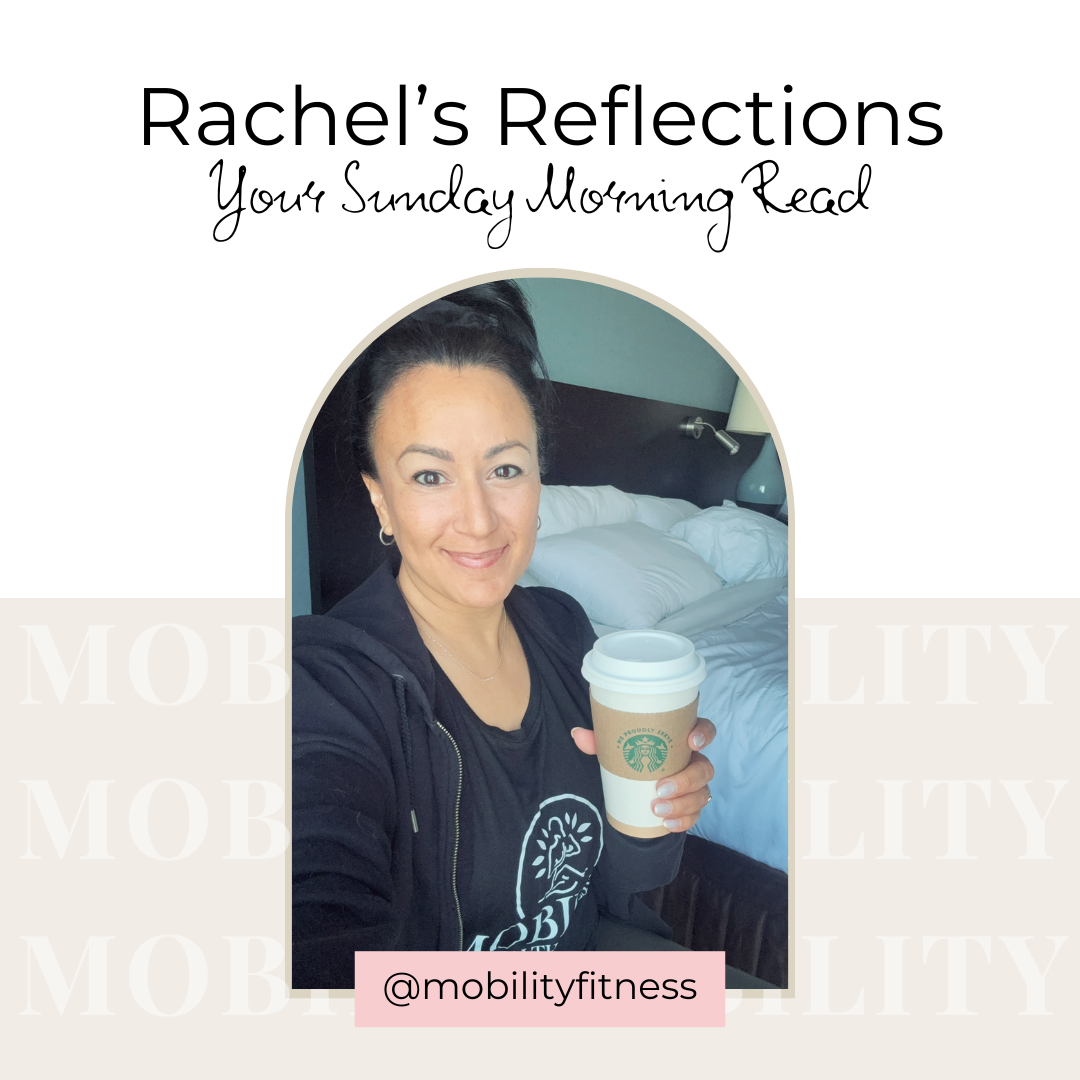

This week’s reflection came from a couple of really important conversations that came up in Women on Weights on Friday. Two different groups, same topic: shoulder pain. Not full-blown injuries, but those nagging “something doesn’t feel quite right” feelings that tend to show up when we’ve been training consistently, pushing ourselves, and doing all the right things… just maybe a little too much, or a little too fast.
A lot of our women work out a lot. And that’s something I genuinely love about this community. You’re committed, you’re strong, and you’re willing to challenge yourselves. But strength only serves us if we can maintain it long term, and that means taking care of our bodies before pain turns into injury.
At Mobility, injury prevention isn’t something we talk about only when something goes wrong. It’s built into how we work out together.
Every class starts with a proper warm-up. Not just to break a sweat, but to prepare your joints, wake up stabilizing muscles, and get blood flowing where it needs to go, especially in vulnerable areas like shoulders and hips. As instructors, we do our best to monitor form throughout each class. We also finish with intentional cooldowns and stretching to help your body transition out of training and begin the recovery process.
When it comes to lifting, we encourage women to lift heavy, as heavy as you can, but only if you can do so with proper form. The moment form starts to break down, or a movement doesn’t feel right in your body, that is your cue to back off. Heavier is not better if it puts your shoulders, back, or joints at risk.
It’s also important to balance out your classes. If you’re doing mostly strength-based classes, your shoulders may be taking on more than they are ready for, especially if mobility, posture, and recovery are not being addressed. This is why we encourage mixing your schedule with strength, conditioning, yoga, and especially yin yoga.
Yin yoga can play a huge role in recovery. Yin targets deep connective tissue like ligaments, fascia, and joints. It helps improve mobility, flexibility, circulation, and tissue resilience. These tissues do not respond well to quick stretches. They need time, patience, and stillness. For many women, especially as we get older, yin can be a real game changer. It can relieve stiffness and also provide deep relaxation and stress relief, something most of us could use more of!
The women in our community are of all ages, but the majority of us are in perimenopause and beyond. Many of us are navigating hormone shifts, and it is important to understand how this affects our bodies. As estrogen declines, tendons and connective tissues lose some elasticity and take longer to recover. This means joints (particularly our shoulders and hips) can feel irritated more easily, recovery takes longer, and signs of overuse can show up faster. This is not a sign of weakness. It is biology. It simply means we need to train smarter, with more thorough warm-ups, more mobility work, adequate rest, and a greater focus on recovery…. And recovery extends beyond the doors of our studio space.
Nutrition and recovery matter here. Protein supports muscle and tissue repair. Hydration keeps joints healthy and tissues pliable. Sleep is when your body actually heals.
You cannot out-train poor recovery.
Another important piece is form. When instructors correct your form, it is never criticism. It is support. It is us looking out for you. We know not everyone learns movement patterns easily in a busy group class, and that is why we often suggest at least a few personal training sessions for women who are struggling with technique. A small amount of one-on-one work can make a huge difference in confidence, form, and long-term safety.
The other night, we also spent some time talking about core engagement. Learning how to properly brace your core helps protect your low back and prevents your hip flexors or shoulders from doing work they should not be doing. These conversations are one of the reasons WOW is one of my favourite classes to teach. When the group is small, there is space to ask questions, learn, and truly understand your body.
And ladies… this part is really important. We love to encourage one another to lift heavier or push one more rep but if something does not feel right, please say no. Always. Pain is not something to push through. Listening to your body is not quitting. It is being smart and will help prevent injury.
If you feel pain coming on, whether that is persistent soreness, sharp discomfort, or tightness that does not ease, that is your sign to modify, rest, swap a class, add mobility, make a physio appointment, or talk to us. Early adjustments prevent long-term injuries.
This community is not about doing the most. It is about doing what allows you to keep showing up, strong, confident, and pain free, for years to come.
As someone who has been too hard on her own body and has dealt with injuries like IT band issues and a rotator cuff injury, this matters deeply to me. My goal with Mobility is to empower women to take care of their bodies and prevent injury. Being forced to stop because you pushed too far can be incredibly hard, both physically and mentally. I have been there, and it is not a good place to be.
So now is the time to be proactive.
Your body carries you through every season of your life. It deserves care, patience, and respect.
We care about your body. We care about your health. We care about longevity. And we care about each other. That is what Mobility is all about. 💗
Until next Sunday,
Rachel xo



.png)

.png)

.jpg)