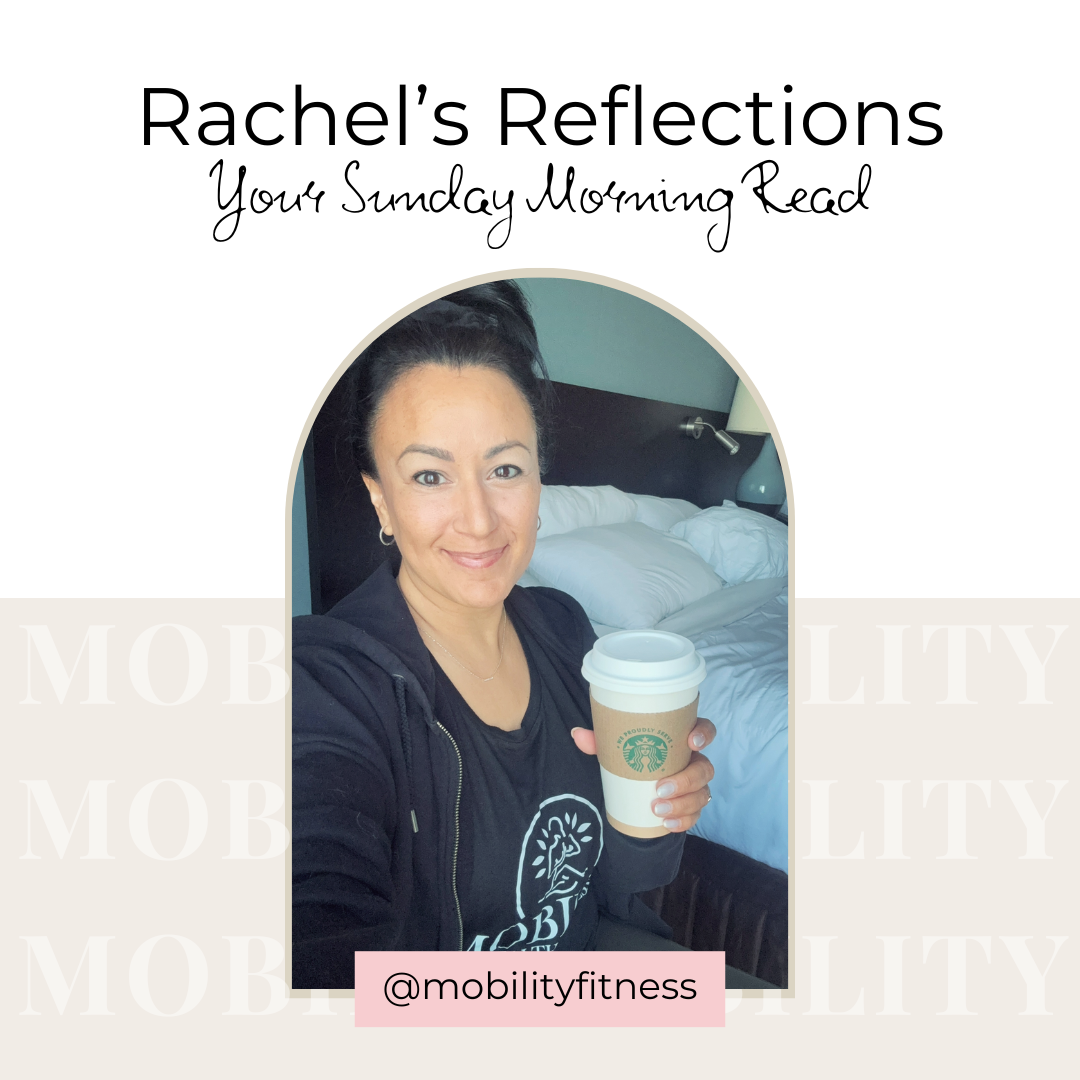
Rachel's Reflections
Train Smarter, Recover Better, Age Stronger
By
November 3, 2026

I've had a few conversations at the studio this week thatgot me thinking about something I wish more women understood. Something we, astrainers, preach to our members. Sometimes, the best thing you can do for yourfitness is actually LESS.
I know, I know. Coming from someone who owns a fitness studio and would love tosee you all every day, that might sound a little strange. 😂But hear me out….
For quite some time now, we've been encouraging some of our members to take acloser look at how much they're doing and whether they're giving their bodiesenough time to recover. And I'm happy to report that some of you are FINALLYlistening to us! 😂 You've scaled back thenumber of challenging workouts you're doing each week, taking more rest days,and finding a better balance between different types of movement. And guesswhat? You're feeling so much better, right?! Less exhausted, fewer nagging achesand pains, and more energy to actually put into your workouts when you show up.Some of you are even noticing that you're getting stronger because you're nolonger constantly running on empty.
I had another conversation this week with someone who doesn't work out atMobility... yet! We were talking about how she manages to maintain her strengthand continue progressing with just a couple of full-body strength workouts eachweek. She sees other people training hard five or six days a week, sometimesstruggling to make progress despite putting in so much more time. And whilethere are plenty of reasons someone might hit a plateau, one of the biggestthings she credits for her own progress is giving her body time to recover. Shetrains hard when she trains, but she doesn't feel the need to hammer her bodyevery single day. Imagine that?!
It's a conversation worth having because somewhere along the way, we've gottenthe idea that more exercise automatically means better results. More classes,more sweat, more calories burned, more days in the gym. And if we take a dayoff, there's sometimes this little voice in our heads telling us we're beinglazy or falling behind.
Trust me, I know that voice all too well. I used to be the girl who thought Ineeded to work out every single day. And not just move my body, but WORK OUT.If I wasn't sweating, pushing myself, or feeling like I'd accomplishedsomething physically challenging, I didn't really count it. Rest days felt likewasted opportunities. And guess what? I injured myself. More than once. Lookingback, I can see that I wasn't always listening to what my body was telling me.I pushed through soreness, ignored little warning signs, and convinced myselfthat being consistent meant never missing a workout. I thought I was doingeverything right because I was so committed to my fitness, but I was missing apretty important piece of the puzzle.
𝐘𝐨𝐮𝐫𝐛𝐨𝐝𝐲𝐝𝐨𝐞𝐬𝐧'𝐭𝐚𝐜𝐭𝐮𝐚𝐥𝐥𝐲𝐠𝐞𝐭𝐬𝐭𝐫𝐨𝐧𝐠𝐞𝐫𝐣𝐮𝐬𝐭𝐛𝐞𝐜𝐚𝐮𝐬𝐞𝐲𝐨𝐮𝐥𝐢𝐟𝐭𝐞𝐝𝐭𝐡𝐞𝐰𝐞𝐢𝐠𝐡𝐭𝐬.𝐈𝐭𝐠𝐞𝐭𝐬𝐬𝐭𝐫𝐨𝐧𝐠𝐞𝐫𝐰𝐡𝐞𝐧𝐢𝐭𝐡𝐚𝐬𝐭𝐡𝐞𝐨𝐩𝐩𝐨𝐫𝐭𝐮𝐧𝐢𝐭𝐲𝐭𝐨𝐚𝐝𝐚𝐩𝐭𝐭𝐨𝐭𝐡𝐞𝐰𝐨𝐫𝐤𝐲𝐨𝐮'𝐯𝐞𝐝𝐨𝐧𝐞.
Here's a little science lesson for you. When we strength train, we're placingstress on our muscles. The resistance creates mechanical tension, which signalsthe body to adapt. Sometimes this also causes microscopic muscle damage,especially when we're doing unfamiliar exercises or increasing the intensity.You've probably heard people say that lifting weights creates tiny tears in ourmuscles that then repair themselves and grow back stronger. That's a simplifiedversion of what happens, but the important thing to understand is that muscledamage isn't the goal, and you certainly don't need to be sore after everyworkout to make progress.
What we really want is to stimulate muscle protein synthesis, the processthrough which our bodies build and remodel muscle proteins. And to support thatprocess, we need proper nutrition, sleep, and recovery. Without those things,we can put in an awful lot of hard work without giving our bodies what theyneed to benefit from it.
As we get older, particularly through perimenopause and menopause, maintainingmuscle becomes increasingly important. Hormonal changes can affect muscle mass,strength, bone health, and how we recover. This is NOT the time to give upstrength training because we're getting older. It's the time to make it apriority. Strength training helps preserve and build muscle, supports ourmetabolic health, improve our ability to do everyday activities, and helpsprotect our independence as we age. It also places beneficial stress on ourbones, encouraging them to maintain their strength. Add in appropriatelyprogrammed impact exercises (if it’s right for your body), and things likejumping, hopping, or other weight-bearing movements, can provide an additionalstimulus for bone health.
I want our women lifting weights. I want you challenging yourselves. I want youbuilding strength that will serve you at 50, 60, 70, 80, and beyond. But I alsowant you to understand that more isn't automatically better.
For many women, two or three well-planned strength workouts a week can be anexcellent foundation. You shouldn’t train the same muscles hard every day, andyou certainly don't need to leave every workout completely exhausted to know itwas worthwhile. The right amount will depend on your goals, experience, andwhat else you're doing throughout the week.
And that brings me to something I really love about the variety of classes weoffer at Mobility. You absolutely CAN come to the studio numerous timesthroughout the week! For many of our members, coming to Mobility is just asmuch about mental health, friendships, and routine as it is about exercise, andI would never want anyone to feel like they had to give that up.
But there's a difference between moving your body regularly and pushing it toits limits every single day. If you're doing challenging strength workouts,bootcamps, or other high-intensity classes several times a week, perhaps theanswer isn't adding another hard workout. Maybe it's balancing those sessionswith yoga, walking, gentle movement, or a proper rest day.
And I want to give yoga a little love here, because it offers so much more thanpeople sometimes realize…
Yoga builds strength in a different way. Holding poses, supporting your ownbody weight, maintaining balance, and moving with control all challenge yourmuscles, particularly the smaller stabilizing muscles we don't always thinkabout. It helps us develop flexibility, mobility, coordination, balance, andbody awareness. It also challenges our minds by asking us to focus, breathe,concentrate, and stay present in what we're doing. Every style of yoga offersopportunities to work on those things, although the physical intensity can varyquite a bit. A strong hot flow can be a demanding workout, while a gentlerpractice might be a better choice when your body needs a little less intensity.
And then there's Yin Yoga. ❤️ For those of you who arealways on the go, Yin offers something completely different. Instead of anotherphysically demanding workout, it's an opportunity to slow down, gently work onflexibility, and give both your body and mind a little breathing room.Sometimes a Yin class is the only hour in my day that I actually give myselfpermission to shut my brain off from work mode. There's a whole lot more to Yinthan most people realize, and I think it deserves a reflection of its own!
The other thing I want us to get better at is listening to our bodies and beingwilling to modify when necessary. I know some women still see modifications astaking the easy way out, but that couldn't be further from the truth. Some daysyou've slept well, eaten properly, and have all kinds of energy. Other daysyou've been up half the night, you're stressed, your joints are aching, oryou're simply exhausted. Hormonal changes, illness, injuries, and everythingelse happening in our lives can influence how we feel and perform.
Choosing lighter weights, skipping the jumping, reducing your range of motion,or taking an extra rest isn't a sign that you're getting weaker. It's a signthat you're paying attention. And there's a big difference between challengingyourself in a healthy way and ignoring what your body is trying to tell you.
So, what can we actually do to help our bodies recover and get the most out ofour training? Here are a few things I'd encourage you to think about.
𝐅𝐢𝐫𝐬𝐭,𝐞𝐚𝐭 𝐞𝐧𝐨𝐮𝐠𝐡 𝐩𝐫𝐨𝐭𝐞𝐢𝐧.
This is a BIG one, especially for women in midlife. Protein provides the aminoacids our bodies use to maintain, repair, and build muscle. For active women, auseful daily target is approximately 1.6 to 2.2 grams of protein per kilogramof body weight. For a woman weighing 150 pounds, that's roughly 110 to 150grams per day. That might sound like a lot, especially if you're used to havingtoast and coffee for breakfast and a salad for lunch! But spreading proteinthroughout your day makes it much more manageable. Think eggs, Greek yogurt,cottage cheese, chicken, fish, lean meats, tofu, beans, or a protein shake whenit's convenient. And don't forget to eat enough overall. Your body needscarbohydrates, fats, and sufficient calories to fuel your workouts and recoverfrom them, too.
𝐒𝐞𝐜𝐨𝐧𝐝,𝐬𝐭𝐚𝐲 𝐡𝐲𝐝𝐫𝐚𝐭𝐞𝐝.
Water plays an important role in temperature regulation, circulation, andnormal muscle function. For many adult women, around two to three litres oftotal fluids a day is a reasonable general starting point, but your individualneeds will vary depending on your body size, activity level, health, and howmuch you sweat. And for our hot and warm yoga ladies, this is especiallyimportant! Heated classes can increase sweat losses considerably, so your fluidneeds may be significantly higher on those days. How much extra you needdepends on the room temperature, how long you're exercising, and how heavilyyou personally sweat. Start hydrating well before class, bring water, andreplace fluids afterward rather than trying to catch up all at once. If you'resweating heavily or attending longer heated sessions, electrolytes,particularly sodium, may also help replace what you've lost. You don'tnecessarily need an electrolyte drink for every class, but you do need to payattention to your body's needs.
𝐓𝐡𝐢𝐫𝐝,𝐦𝐚𝐤𝐞 𝐫𝐞𝐜𝐨𝐯𝐞𝐫𝐲 𝐩𝐚𝐫𝐭 𝐨𝐟 𝐲𝐨𝐮𝐫 𝐬𝐜𝐡𝐞𝐝𝐮𝐥𝐞.
I would encourage most of you to have at least one day each week without achallenging workout, and potentially more depending on your training. If you'restrength training, try to allow adequate recovery before challenging the samemuscle groups again. For many people, around 48 hours is a useful startingpoint. That doesn't mean you can't move! Go for a walk, enjoy a gentle yogaclass, get outside, or spend some time stretching. Active recovery can feelwonderful, but there's also absolutely nothing wrong with taking a complete dayoff (or two!) when your body needs it.
𝐅𝐨𝐮𝐫𝐭𝐡,𝐤𝐧𝐨𝐰𝐰𝐡𝐚𝐭𝐬𝐮𝐩𝐩𝐥𝐞𝐦𝐞𝐧𝐭𝐬𝐲𝐨𝐮𝐫𝐛𝐨𝐝𝐲𝐚𝐜𝐭𝐮𝐚𝐥𝐥𝐲𝐧𝐞𝐞𝐝𝐬.
I'm a big believer in getting the basics right first, especially propernutrition, hydration, and sleep, but certain supplements can be helpfuldepending on your individual needs. Creatine monohydrate, for example, is oneof the most researched supplements for supporting muscle strength and exerciseperformance, and there's some really interesting emerging research into itspotential benefits for brain health, too! And no, ladies, creatine isn't goingto make you bulky! 😂 Other supplements, likevitamin D, magnesium, or vitamin B12, may be beneficial for some women, butthat doesn't mean everyone needs to be taking them. Our needs can change as weage, especially through perimenopause and menopause, so it's important to understandwhat YOUR body needs rather than buying every supplement you see advertised onsocial media. And if you're not sure where to start, go have a chat with ourfriends at Hippie Chiks! They have a great selection of wellness products andcan help you explore your options. Just remember to check with your healthcareprovider or pharmacist before starting new supplements, particularly if youtake medications or have existing health conditions.
𝐅𝐢𝐟𝐭𝐡,𝐩𝐫𝐢𝐨𝐫𝐢𝐭𝐢𝐳𝐞 𝐬𝐥𝐞𝐞𝐩.
I know this one can be easier said than done (believe me, I know!), especiallyfor women dealing with perimenopause, menopause, stress, or a million thingsrunning through their heads at bedtime. But sleep is when so much of ourphysical and mental recovery takes place. Aim for seven to nine hours whenpossible, and if your sleep has been terrible, recognize that you may need toadjust your workout intensity rather than trying to push through as thoughnothing is different. Or maybe I (I mean we 😅) just need a differentnight time routine!
𝐀𝐧𝐝 𝐟𝐢𝐧𝐚𝐥𝐥𝐲,𝐟𝐢𝐧𝐝 𝐚 𝐛𝐚𝐥𝐚𝐧𝐜𝐞 𝐨𝐟 𝐦𝐨𝐯𝐞𝐦𝐞𝐧𝐭 𝐭𝐡𝐚𝐭 𝐦𝐚𝐤𝐞𝐬 y𝐨𝐮 𝐟𝐞𝐞𝐥 𝐆𝐎𝐎𝐃.
Strength train because maintaining muscle is one of the best investments youcan make in your long-term health. Challenge your cardiovascular system.Include appropriate weight-bearing and impact activities for your bones. Doyoga to work on strength, mobility, flexibility, balance, breathing, and focus.Try Yin to practise slowing down. Go for walks. Take rest days. And mostimportantly, pay attention to how your body responds.
The goal isn't to see how many classes you can squeeze into seven days. Thegoal is to build a strong, capable, healthy body that allows you to keep doingthe things you love for years to come.
And if you're not sure what that balance should look like for you, that'sexactly what we're here for. At Mobility, we offer free No-Sweat Intros, wherewe can sit down, talk about your goals, your health, your experience, and whatyou're hoping to accomplish. Whether you're brand new or you've been exercisingfor years, sometimes having someone help you look at the bigger picture makesall the difference.
And for our members with recurring class memberships, remember that you cantake advantage of your accountability sessions with April. These aren't justabout making sure you're showing up! We can look at how you're feeling, what'sworking, what isn't, your schedule, and our class schedule, and help you builda routine that includes the right balance of strength, cardio, yoga, andrecovery for YOUR body.
I want you to keep showing up. I want you lifting weights, challengingyourselves, getting stronger, and enjoying all the wonderful things movementcan do for your physical and mental health. But I also want you to feel gooddoing it. I don't want you constantly exhausted, sore, or feeling guiltybecause you took a day off. And I sure as f*ck don’t want you injuringyourself. Fitness should add to your life, not leave you too worn out to enjoyit.
And to the ladies we've been chatting with lately who have started making theseadjustments, scaling back a little, adding more recovery, or finding a betterbalance between their classes, I've been LOVING hearing how much better you'refeeling. Some of you are realizing that you actually have more energy to putinto your workouts now, and that's exactly what we've been trying to tell you! 😂
So, ladies, help me out here. If you've made these changes and noticed adifference, let us know in the comments! Tell the other women what you'vechanged and how you're feeling, because sometimes hearing it from someone who'sbeen there means a whole lot more than hearing it from your trainer for thehundredth time. 😂❤️
Until next Sunday friends!
~Rachel 💕